
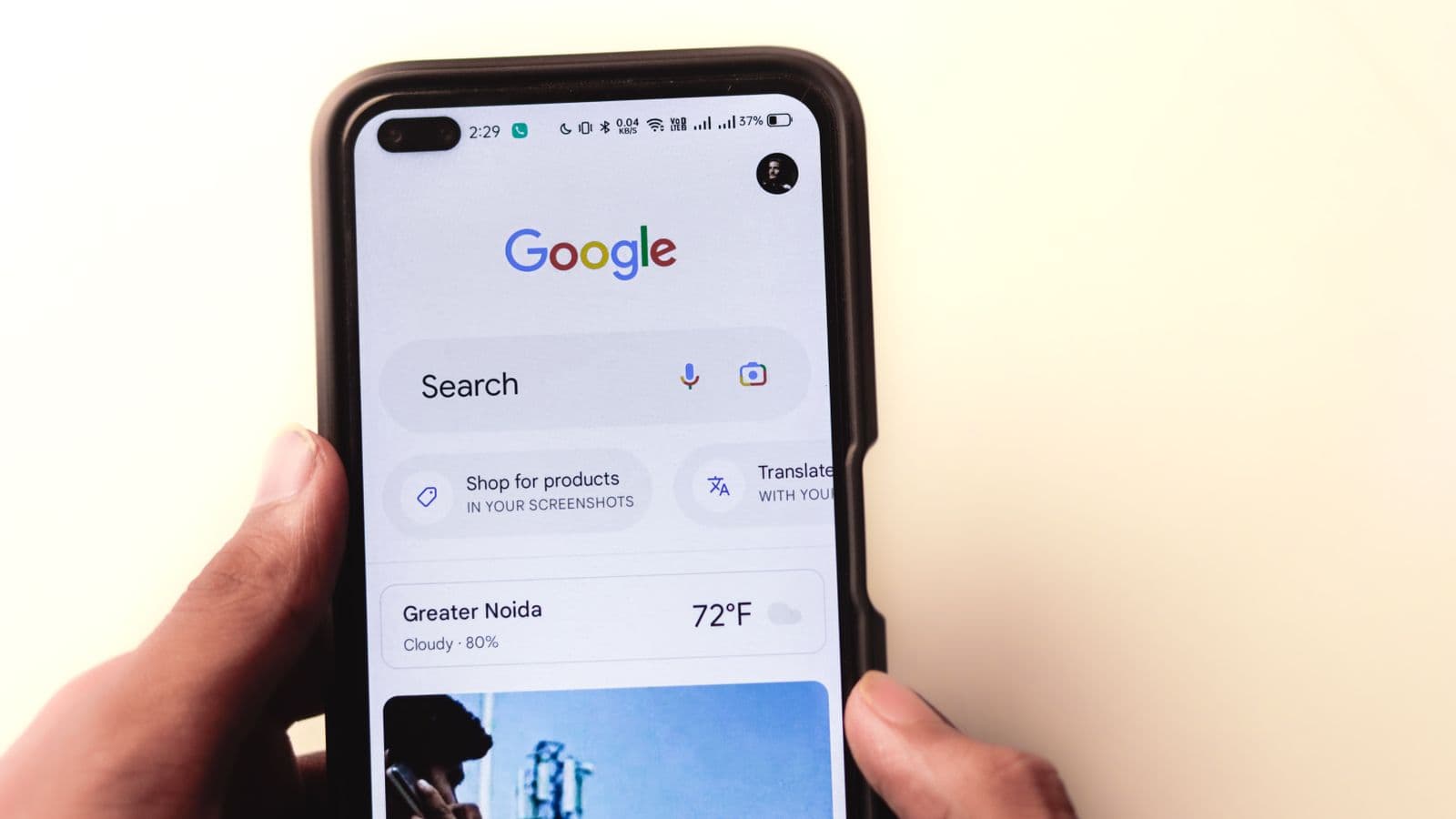
Google's AI Mode has been available in Austria since autumn 2025, and many search results now open with an AI Overview that hands over the answer directly. Some agencies have declared "SEO is dead"; others are selling panic packages. For a hair salon in Ottakring or a café in Neubau, the question is simpler: is a website still worth having if Google stops sending people there?
The short answer: yes – but for different reasons than two years ago.
What the numbers really show
In February 2026, Sistrix analysed around 100 million German-language search terms. About one search in five now shows an AI Overview. Where one appears, the click-through rate for position 1 drops from about 27 to 11 percent. Across German-speaking websites that adds up to roughly 265 million lost clicks a month – about 6.6 percent of all organic clicks.
An Ahrefs study from the same month paints a similar picture: when an AI Overview sits above the results, the first result gets around 58 percent fewer clicks. That is real, and it hits some websites hard.
Who loses – and who barely does
The losses are concentrated in knowledge questions: "How often should I get a haircut?", "What helps with bleeding gums?". Advice portals and health sites lose double-digit shares. People who want to buy, book or enquire keep clicking, because an AI can't cut your hair or set your table.
A Vienna business rarely lives on knowledge questions. It lives on searches like "hairdresser 1160 appointment today" or "emergency plumber Vienna 10th district". Those are the least affected. The real problem is a different one.
The uncomfortable truth: the AI reads your website
Google's AI doesn't invent its answers. It assembles them from websites, Google profiles, reviews and directories. Without a website of your own, others describe your business: an outdated directory listing, a review platform, or at worst a competitor who answers the same question better.
If someone asks "Which salon in Ottakring does balayage for under €150?", the AI can only name you if it is written somewhere that you offer balayage and what it costs. In the US, Google already goes a step further: AI Mode books tables directly through reservation services. Businesses that don't show their offers in a machine-readable way are simply skipped.
What your website needs to do now
First: clear facts as real text, not images or PDFs – services, starting prices, district, opening hours, languages. What the AI can't read doesn't exist for it.
Second: structured data in the background that tells Google exactly what you are, where you work and what you offer. Third: the same details on your website and your Google Business Profile, because contradictions cost trust with people and machines alike.
Fourth: answers to the questions your customers actually ask, each on its own page or section. And fifth: a fast mobile page with a call, WhatsApp or booking button right at the top. Whoever still clicks today has usually made up their mind – don't make them take a detour.
Bottom line: fewer clicks, better clicks
The website is losing its role as an encyclopedia. It is becoming what it should always have been for a small business: the reliable source about your company – for customers and for AI – and the shortest path to an enquiry. Without one, you leave the story of your business to others.
Not sure your website is ready? Send us the link: you'll get a short free video showing what Google and its AI find on your site – and what they miss.